
Favorite Raspberry Feature
7 Underappreciated Raspberry Pi Features Every Maker Should Explore
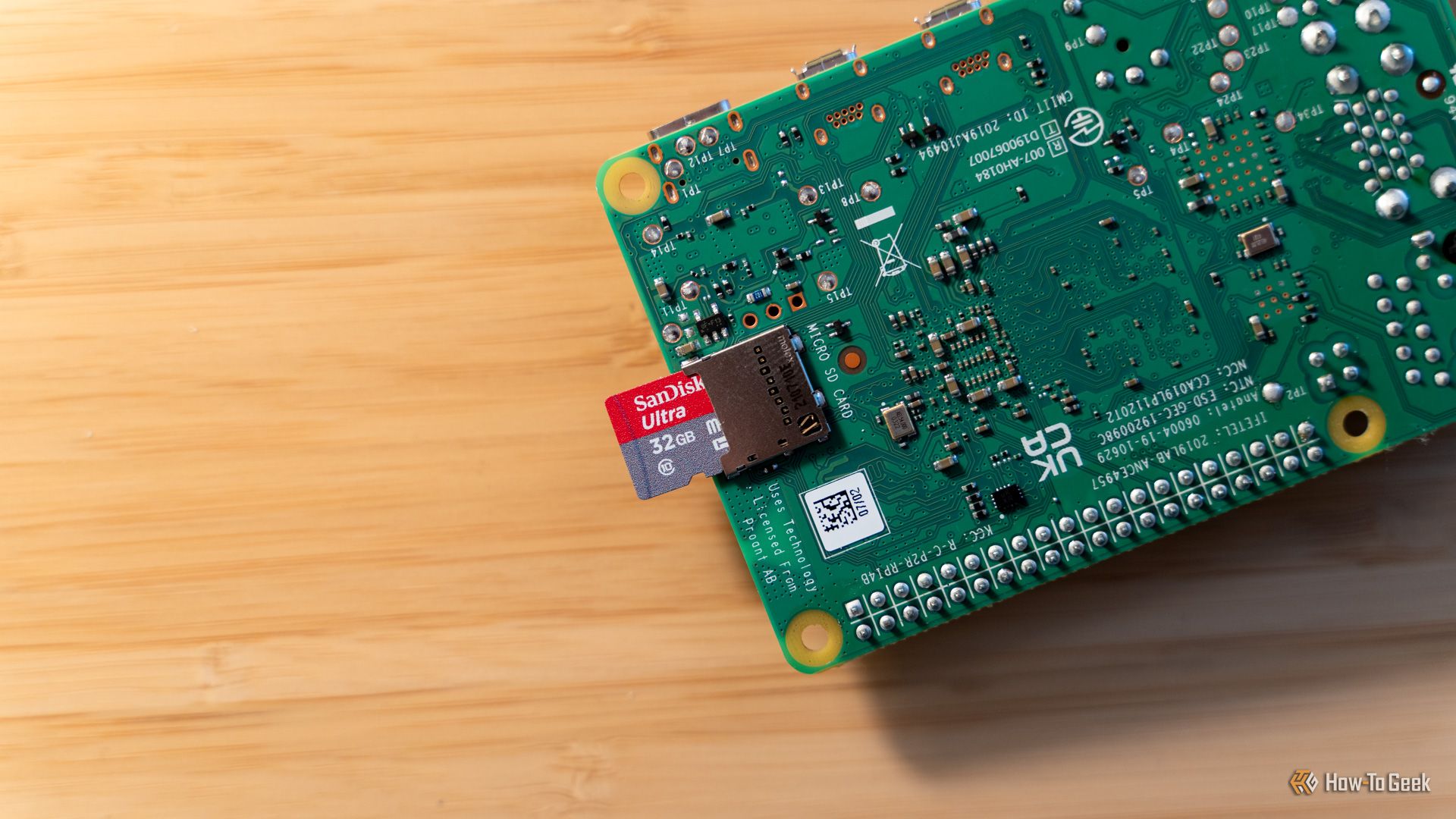
The Raspberry Pi has revolutionized the world of DIY electronics, making computing accessible and affordable for millions While its compact size, low power consumption, and versatility are widely celebrated, many of its most impactful capabilities often fly under the radar
True power users and seasoned makers understand that the real magic of the Raspberry Pi lies in these less-talked-about, yet incredibly powerful, aspects This list will dive deep into seven such “hidden gems” that, once understood, are sure to become your new favorite features, unlocking new dimensions for your projects
Favorite Raspberry Feature: Top 7 Raspberry Pi Features That Will Elevate Your Projects
1 The Versatile GPIO Pin Ecosystem & HATs
Beyond simply having input/output pins, the Raspberry Pi’s General Purpose Input/Output (GPIO) ecosystem is a masterclass in rapid prototyping and modular expansion
These pins aren’t just for blinking LEDs; they’re a direct gateway to the physical world, allowing your Pi to interact with an astonishing array of sensors, actuators, and external hardware
The beauty lies in the simplicity of controlling them programmatically, typically with Python, making complex hardware integrations surprisingly straightforward
What truly elevates the GPIO is the vast ecosystem of Hardware Attached on Top (HATs) and pHATs These specialized boards plug directly onto the GPIO header, instantly adding functionality like motor control, display interfaces, power management, or even cellular connectivity without complex wiring
This modularity drastically reduces development time and lowers the barrier to entry for ambitious projects, allowing makers to focus on software and system logic rather than intricate circuit design
2 The Unrivaled Community & Extensive Documentation
While not a physical “feature” of the board itself, the Raspberry Pi’s vibrant, global community and the wealth of freely available documentation are arguably its most valuable asset
For any maker, especially beginners, encountering a problem or needing inspiration is inevitable The Pi community offers an unparalleled network of support through official forums, countless blogs, YouTube tutorials, and open-source project repositories like GitHub
This collective knowledge base means that almost any project idea, no matter how niche, likely has a tutorial, code snippet, or a forum thread discussing it
This significantly flattens the learning curve and empowers users to tackle projects that might otherwise seem daunting The sheer volume of readily available, high-quality information transforms potential roadblocks into solvable challenges, making the Raspberry Pi one of the most accessible platforms for learning and innovation
3 Silent, Power-Efficient, Always-On Operation
Everyone knows Raspberry Pis are low-power, but the true brilliance lies in what this enables: silent, fanless, and always-on operation for extended periods
Unlike traditional desktop PCs, many Raspberry Pi models (especially those running lighter workloads) can run purely on passive cooling, making them ideal for noise-sensitive environments like bedrooms or living rooms
This quiet operation is a game-changer for home automation hubs, media servers, or ambient data displays
Furthermore, their minimal power draw translates into extremely low running costs, making them perfect candidates for 24/7 server applications Think of a personal cloud storage, a network-wide ad blocker (Pi-hole), or a home security camera system – these are all applications that benefit immensely from a device that sips power, generates minimal heat, and can be left unattended for months or even years
This long-term, reliable operation is a feature often overlooked in favor of raw processing power
4 The Full-Fledged Debian-Based OS & Software Repositories
The Raspberry Pi isn’t just a tiny computer; it’s a tiny computer running a full-fledged Linux operating system, typically Raspberry Pi OS (based on Debian)
This means you’re not limited to a proprietary, stripped-down environment You have access to the vast, mature, and incredibly powerful world of Linux This includes robust command-line tools, a complete desktop environment (if desired), and the `apt` package management system
The `apt` system, in particular, is a powerhouse It allows users to easily install, update, and manage thousands of open-source software packages with simple commands From web servers (Apache, Nginx) and databases (MySQL, PostgreSQL) to programming languages (Python, Node
js, PHP) and development tools, almost anything available on a standard Linux distribution is accessible on the Pi This transforms the Pi from a simple microcontroller into a versatile development and deployment platform for complex software projects
5 The Industrial-Grade Compute Module Series
While the standard Raspberry Pi boards are fantastic for hobbyists and educational purposes, the Compute Module (CM) series reveals the Pi’s serious industrial and embedded potential
These modules are essentially the “guts” of a Raspberry Pi, packaged in a smaller, more robust form factor designed for integration into custom Printed Circuit Boards (PCBs)
They lack the standard ports (USB, HDMI, Ethernet) but expose all the processor’s interfaces directly, allowing developers to design bespoke carrier boards
This feature is crucial for commercial products, specialized robotics, or custom embedded systems where a standard Pi board might be too bulky or lack specific I/O requirements
The CM series demonstrates that the Raspberry Pi isn’t just a toy; it’s a powerful, cost-effective, and highly customizable engine for professional applications, often driving everything from smart appliances to industrial control systems behind the scenes
6 Hardware Acceleration for Multimedia & AI
Many users focus on the Pi’s CPU capabilities, often overlooking its surprisingly potent hardware acceleration features The VideoCore VI GPU (in Pi 4/5) and dedicated Video Processing Unit (VPU) are not just for displaying the desktop environment; they offer significant power for multimedia tasks like video decoding/encoding and even certain AI/ML workloads
This offloads tasks from the main CPU, allowing for smoother performance in media centers (like Kodi) or specific machine vision applications
While not a powerhouse for complex AI training, the Pi can efficiently run inference models for tasks like object detection, facial recognition, or voice control, especially when leveraging optimized libraries or its dedicated hardware
This capability opens doors for smart camera systems, interactive displays, or edge computing devices that require real-time processing of visual or audio data without heavy reliance on cloud services
7 Robust Storage Solutions: USB Booting & NVMe Support
For years, the Achilles’ heel of the Raspberry Pi was often its reliance on microSD cards for storage, which, while convenient, can be prone to corruption or offer limited speeds and longevity
However, newer Raspberry Pi models (especially Pi 4 and Pi 5) have significantly improved their storage options, making USB booting a standard and reliable feature, and even introducing native NVMe SSD support via PCIe on the Pi 5
Moving to a USB SSD or NVMe drive dramatically enhances the Pi’s performance and reliability It provides faster boot times, quicker application loading, and significantly improved database or file server operations
Crucially, it offers far greater endurance and stability compared to microSD cards, making the Pi a much more viable platform for always-on servers, high-traffic web applications, or any project requiring robust and fast persistent storage
This upgrade truly transforms the Pi from a hobby board into a serious, dependable mini-computer
Final Thoughts
The Raspberry Pi is far more than the sum of its obvious parts Its true strength lies in the synergistic combination of its hardware capabilities, the flexibility of its software, and the incredible support of its community
By delving into these often-overlooked features – from the expansive GPIO ecosystem and robust storage options to its industrial applications and powerful software environment – makers can unlock a new level of potential for their projects
What’s your favorite underappreciated Raspberry Pi feature Share your insights and inspire others
Source: Inspired by a discussion on overlooked Raspberry Pi features.