
Intel Core Ultra iGPU Drivers
Intel Core Ultra Series 3 iGPU Drivers: Ready to Redefine Mobile Gaming?
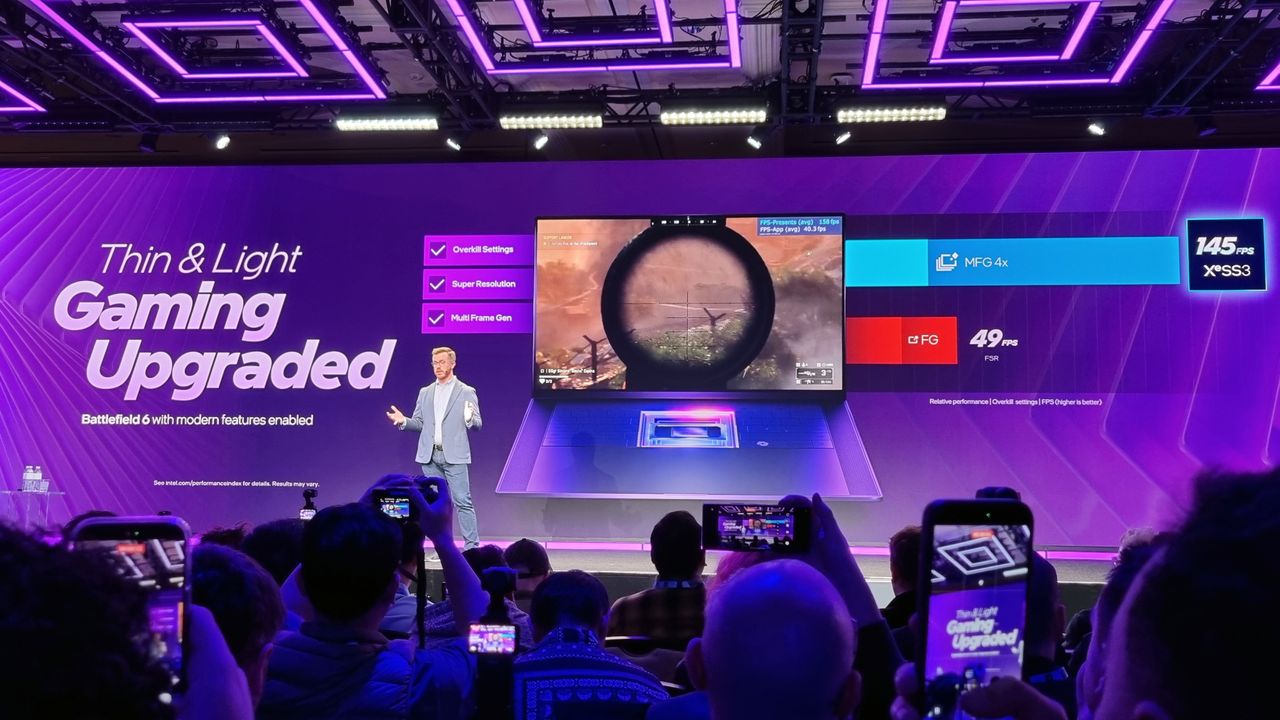
Intel is making bold claims about its next-generation Core Ultra Series 3 mobile chips, specifically touting a massive leap in integrated GPU (iGPU) gaming performance With the Panther Lake-based chips promising up to 77% faster iGPU gaming than their Lunar Lake predecessors, the spotlight isn’t just on raw power, but crucially, on the often-overlooked hero of PC gaming: graphics drivers
Historically, Intel’s driver support has been a mixed bag, leading to skepticism among gamers This review delves into Intel’s aggressive new strategy to overcome past challenges, re-architecting its software stack and investing heavily in developer engagement
Can Intel truly deliver a “light years ahead” driver experience and finally tempt serious gamers towards its powerful new integrated graphics solutions
Intel Core Ultra iGPU Drivers: What It Offers
The upcoming Intel Core Ultra Series 3 mobile chips, built on the Panther Lake architecture, aim to significantly elevate the integrated graphics experience. Here’s a breakdown of what Intel is promising, particularly in the realm of driver support:
- Up to 77% Faster iGPU Gaming: Intel claims a substantial performance increase over Lunar Lake, positioning these chips as a viable option for modern gaming in thin and light devices.
- Re-architected Software Stack: A complete overhaul of the graphics software strategy, designed for improved stability and performance.
- Extensive Game Day Testing: A commitment to rigorous testing across a vast library of games to ensure compatibility and optimal performance.
- Day Zero Driver Support: A major focus on providing immediate driver updates for new game releases, a critical factor for competitive gaming.
- Modern Feature Set: Integration of contemporary graphics features to keep pace with industry standards.
- Deep Developer Engagement: Over 300 developers engaged on pre-release titles and 50 day-zero driver releases in the past year, indicating a proactive approach.
- Unified Software Layers: Key layers within the software stack have been unified, allowing for deep optimization that can be reused across multiple APIs, streamlining development and improving consistency.
- Scaled Testing Infrastructure: Validation now extends to hundreds of games, moving beyond a select few to ensure broad compatibility and identify issues more effectively.
- Early Co-Engineering: Engaging with game developers 18 to 24 months before a game’s release to co-engineer support and ensure optimal Intel integration from day one.
- Vs. AMD Radeon iGPUs: For years, AMD has held the crown for integrated graphics performance and, crucially, a more stable driver experience. Their RDNA-based iGPUs have consistently offered a compelling gaming solution for laptops without discrete cards. Intel’s Core Ultra Series 3, with its claimed 77% leap, is directly targeting AMD’s leadership here. If Intel’s driver claims hold up, they could finally offer a true challenger, potentially even surpassing AMD in some performance metrics, while also leveraging Intel’s traditional CPU advantages. The key differentiator will be Intel’s ability to match AMD’s long-standing reputation for driver reliability.
- Vs. Entry-Level Discrete GPUs (Nvidia MX/RTX 3050, AMD RX 6000M/7000S series): While Intel’s iGPUs won’t compete with high-end discrete GPUs, they are aiming for the performance tier where entry-level discrete cards often reside. The benefit of a powerful iGPU is that it reduces system complexity, cost, and power consumption, allowing for thinner, lighter, and longer-lasting laptops. If the Core Ultra iGPUs can deliver performance close to, say, an RTX 3050 Mobile, with rock-solid drivers, they could make many entry-level discrete GPUs redundant in the thin-and-light segment.
Intel Core Ultra iGPU Drivers: Pros and Cons
Intel’s renewed focus on graphics drivers presents a compelling vision, but it’s essential to weigh the potential benefits against the historical context and inherent challenges.
Pros: Ambitious Performance Targets: The claimed 77% iGPU performance boost is genuinely exciting, potentially making truly capable gaming laptops without discrete GPUs a reality for many Strategic Investment in Drivers: Intel’s acknowledgment of past shortcomings and the significant resources poured into re-architecting the software stack, scaling testing, and engaging developers is a vital step forward
Critical Day Zero Support: A commitment to day zero drivers is non-negotiable for gamers and signals Intel’s intent to be a serious player in the gaming hardware space
Potential for Thin & Light Gaming: If these claims hold true, it unlocks the potential for ultra-slim, power-efficient laptops that can handle modern games, appealing to a broader market
Unified Stack Efficiency: The strategy of unifying software layers could lead to more robust, consistent, and easier-to-maintain drivers across different products and APIs
Cons: Historical Reputation to Overcome: Intel has a long history of inconsistent graphics driver quality, leading to deep-seated skepticism among PC gamers
Rebuilding trust will be a significant uphill battle “Light Years Ahead” Needs Proof: While the rhetoric is strong, the real-world experience, as evidenced by some recent Arc B580 desktop GPU driver issues, suggests there’s still work to be done
Catching Up to Established Rivals: AMD and Nvidia have decades of experience and massive ecosystems built around their graphics drivers Intel is playing catch-up in a highly competitive arena
Gamer Skepticism: Gamers are a discerning audience Performance benchmarks are one thing, but a smooth, bug-free gaming experience across a wide range of titles is what truly matters, and that takes time to prove
Long-Term Commitment: Sustaining this level of investment and developer engagement requires consistent effort over many years to truly solidify Intel’s position as a reliable graphics provider
Our Take
Intel’s narrative around its Core Ultra Series 3 iGPU drivers isn’t just about technical specifications; it’s a story of redemption and ambition For years, Intel’s integrated graphics were considered adequate for productivity and light media consumption, but largely irrelevant for serious gaming
The “mixed bag” era, as Intel itself admits, led to a perception gap that even impressive hardware couldn’t always bridge due to driver inconsistencies
The current strategy, however, feels genuinely different It’s not just about throwing more processing power at the problem; it’s about fundamentally rethinking the entire software pipeline, from initial code architecture to end-user validation
The focus on unifying software layers is particularly astute, as it promises a more cohesive and less fragmented driver experience Furthermore, scaling testing to “hundreds of games” and engaging developers 18-24 months in advance isn’t just good practice—it’s absolutely essential for any company serious about competing with the likes of AMD and Nvidia in the gaming space
My expert opinion is that Intel is finally recognizing that raw performance numbers mean little without a polished, reliable software experience The 77% performance uplift claim is impressive on paper, but the true value lies in how consistently and smoothly that performance translates to actual gameplay
The recent history with the Arc B580 desktop GPUs serves as a stark reminder that even with good intentions, execution in the complex world of graphics drivers is incredibly challenging
Gamers demand stability, compatibility, and consistent updates, not just peak frame rates
If Intel can truly deliver on these promises, the implications for mobile computing are profound Imagine ultra-portable laptops that don’t just handle esports titles but can comfortably run demanding AAA games at respectable settings, all without the added cost, bulk, and power draw of a discrete GPU
This isn’t just about Intel winning market share; it’s about expanding the definition of what’s possible in a thin-and-light form factor, democratizing access to more capable gaming experiences on the go
How It Compares
When evaluating Intel’s iGPU driver ambitions, the natural comparisons are with AMD’s integrated Radeon graphics and, to a lesser extent, entry-level discrete GPUs from both AMD and Nvidia.
When to choose this option The Intel Core Ultra Series 3 with its enhanced iGPU and promised driver stability is ideal for users prioritizing portability, battery life, and cost-effectiveness, but who still want to enjoy a significant gaming experience
It’s for the student who wants to play AAA titles between classes, the professional who travels frequently but enjoys gaming, or anyone looking for a powerful all-in-one solution without the compromises often associated with discrete graphics in a mobile form factor
The success hinges entirely on whether Intel can consistently deliver on its driver promises and build that critical trust with the gaming community
Final Verdict
Intel’s declared revolution in graphics drivers, paired with the substantial performance uplift promised by its Core Ultra Series 3 iGPUs, represents a pivotal moment for the company and for mobile gaming
The journey from “mixed bag” to “light years ahead” is ambitious, but the detailed strategy—from re-architecting the software stack and scaling testing to deep, early developer engagement—suggest
Pingback: These Massive Headphones Challenge Audio Norms - All Your Keys