
Intel Arc B390 iGPU Review: A Game-Changer for Integrated Graphics
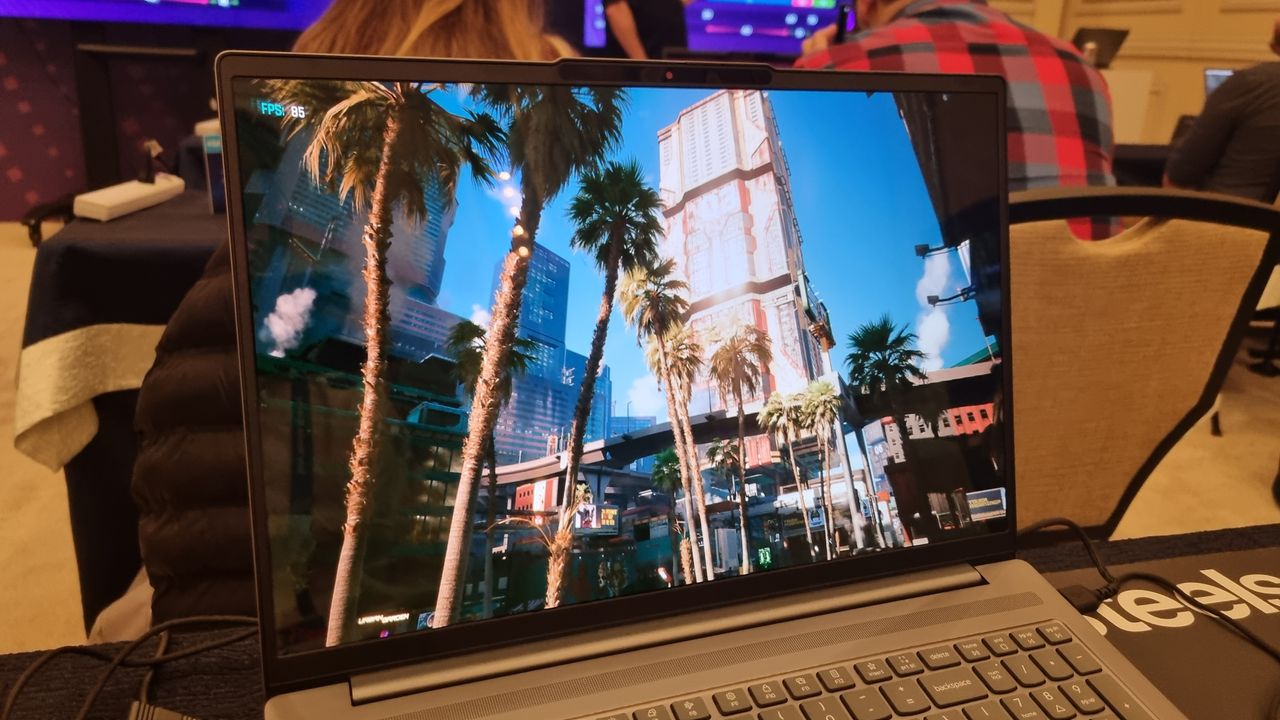
In the world of computer hardware, integrated graphics processing units (iGPUs) have often been seen as a compromise between performance and power efficiency However, Intel’s latest offering, the Arc B390 iGPU, is set to challenge this perception
As part of Intel’s Core Ultra Series 3 mobile chips, the Arc B390 promises to deliver impressive gaming performance without the need for a discrete graphics card
In this review, we’ll put the Arc B390 through its paces, examine real‑world benchmarks, and decide whether it truly lives up to the hype
What It Offers 12 Xe‑cores delivering a notable boost over previous Intel iGPUs Native support for up to 1200p resolution at high settings XeSS (Xe Super Sampling) integration for AI‑driven upscaling and frame‑rate gains
Seamless integration with Intel’s Core Ultra Series 3 (Panther Lake) CPUs Power‑efficient design that extends battery life on thin‑and‑light laptops
Pros and Cons
Pros Strong gaming performance for an iGPU: Achieved 53 fps in Cyberpunk 2077 at 1200p without any upscaling
XeSS boost: Frame rates jumped to 74 fps in the same title when XeSS Quality mode was enabled Low power draw: Keeps laptops cool and extends battery life compared to discrete GPUs
Future‑proof potential: The 12‑core architecture could make slim gaming handhelds viable
Cons Struggles with very demanding titles: Borderlands 4 capped at 40‑45 fps even with XeSS
Frame‑generation quirks: Intel’s FG worked in Cyberpunk 2077 but was unreliable in other games Not a 4K solution: The iGPU is still best suited for 1080p‑1200p workloads
Limited driver maturity: Early‑access drivers may still have optimization gaps
Our Take
Testing on a Lenovo laptop equipped with the Core Ultra X9 388H (Panther Lake) showed that the Arc B390 can deliver a genuinely playable experience in modern, graphically intensive games—something that would have been unthinkable for an iGPU just a few years ago
In Cyberpunk 2077, the chip managed a solid 53 fps baseline, and with XeSS it comfortably crossed the 70 fps threshold, making the experience “smooth enough” for most gamers
Shadow of the Tomb Raider, an older but still demanding benchmark, averaged 75 fps at 1200p high settings, confirming the chip’s versatility across generations
Where the Arc B390 falters is in ultra‑demanding titles like Borderlands 4, where even the RTX 5090 struggles.When discussing Intel Arc B390 iGPU, The iGPU’s performance ceiling appears to sit around the 40‑45 fps mark for such workloads, indicating that while it’s a massive step forward, it isn’t a replacement for a mid‑range dedicated GPU.
Overall, the Arc B390 feels like a “Rubicon‑crossing” moment for thin‑and‑light laptops: it opens the door for users who previously dismissed integrated graphics as a gaming dead‑end.
Intel Arc B390 iGPU: How It Compares
Intel claims the Arc B390 is roughly 10 % faster than an Nvidia RTX 4050 on average.When discussing Intel Arc B390 iGPU, While a direct side‑by‑side test is still pending, our early benchmarks suggest the iGPU sits somewhere between the RTX 3050 and RTX 4050 in real‑world performance—far ahead of AMD’s integrated Radeon Graphics solutions and a clear win over Intel’s older Xe‑graphics.
Compared to competing iGPUs, the Arc B390’s XeSS upscaling gives it a distinct advantage, allowing it to punch above its raw rasterization numbers.When discussing Intel Arc B390 iGPU, For users who value battery life and a thin chassis, the Arc B390 now offers a viable alternative to adding a bulky discrete GPU.
Final Verdict
The Intel Arc B390 iGPU is a remarkable leap for integrated graphics It delivers respectable frame rates in modern titles at 1200p, especially when XeSS is employed, and does so with a power envelope that keeps laptops cool and efficient
While it won’t replace a dedicated GPU for hardcore 4K or ultra‑high‑refresh‑rate gaming, it redefines what’s possible in a GPU‑less notebook
We recommend the Arc B390 for:
- Casual to mid‑range gamers who prioritize portability over absolute performance.
- Professionals needing a thin laptop that can still handle occasional gaming or GPU‑accelerated workloads.
- Developers of gaming handhelds or ultra‑light laptops looking for a balanced power‑performance solution.
If you’re comfortable tweaking settings and leveraging XeSS, the Arc B390 can provide a surprisingly smooth experience without the weight, heat, and cost of a discrete GPU.
Source: PC Gamer – “I did some quick and dirty testing of the Intel Arc B390 iGPU in Intel’s new top‑end Core Ultra chip and I’m pretty impressed.”
Related Articles
- CES 2026: Intel’s New Chips Are Coming For Your Gaming Handhelds
- Intel says its graphics drivers are now ‘light years ahead of where we were a few years ago’, and they’ll need to be if it’s going to tempt gamers towards its new iGPUs
- Intel’s new top-end Core Ultra Series 3 mobile chips promise up to 77% faster iGPU gaming performance than Lunar Lake, and come with a whole host of friends